

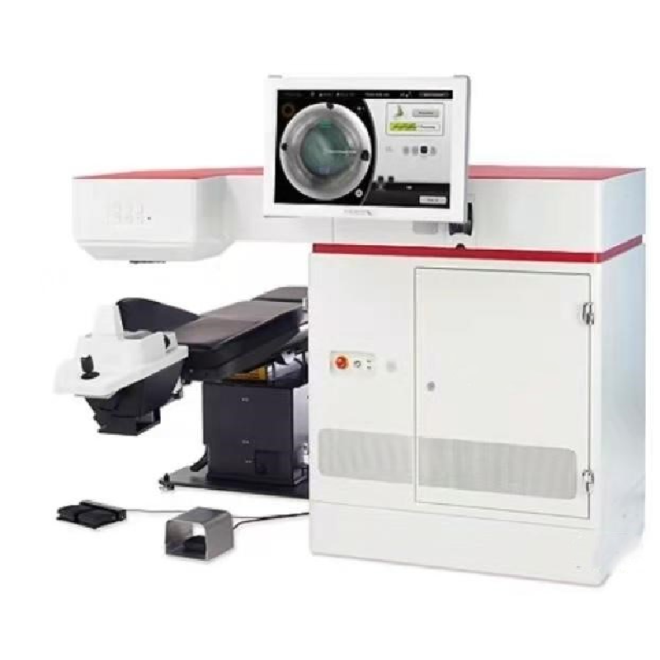
Your eyes glaze over whenever you see “femtosecond laser,” and suddenly every sentence feels like a physics exam you did not revise for—yet you still want to know how this tiny, super‑fast light can actually help patients.
Relax—femtosecond lasers simply fire ultra‑short light pulses that let doctors cut, shape, or image tissue with extreme precision and minimal damage, improving surgeries from eye care to neurology (NIH review on femtosecond lasers in medicine).
🔬 Principles of Femtosecond Lasers and Tissue Interaction Mechanisms
Femtosecond lasers emit ultra-short light pulses that deliver high peak power with minimal heat. They create precise cuts in tissue while reducing surrounding damage and inflammation.
This cold, localized action supports delicate medical and biomedical procedures, from eye surgery to micro-tissue engineering, while keeping structures around the target area safe.
1. Ultrashort Pulse Generation
Femtosecond lasers generate pulses in quadrillionths of a second. The short pulse time focuses energy into a tiny volume, enabling accurate cutting at the micron level.
- Pulse duration: 10–100 fs
- High peak power, low average heat
- Stable beam profile for repeatable cuts
2. Nonlinear Absorption in Tissue
At the focus point, tissue absorbs light through nonlinear effects. This means the beam only interacts strongly where it is tightly focused, leaving other areas untouched.
- Localized plasma formation
- Confined disruption of cells
- Minimal impact on surface tissue
3. Photodisruption and Bubble Formation
The laser forms micro-bubbles that gently separate tissue. Surgeons can control depth and form of each cut by adjusting focus and pulse energy.
| Parameter | Effect |
|---|---|
| Pulse energy | Size of micro-disruption zone |
| Focus depth | Layer of tissue treated |
4. Reduced Thermal and Mechanical Damage
Because energy delivery is so fast, heat does not spread far from the target. This lowers scarring and supports better functional recovery.
- Less collateral tissue damage
- Lower risk of post-op inflammation
- Smoother healing surfaces
🧠 Applications in Neurosurgery, Ophthalmology, and Other Precision Micro-Surgeries
Femtosecond lasers support ultra-precise cuts in brain, eye, and microsurgical fields. They help surgeons protect vital structures while improving consistency and outcomes.
These systems integrate with image guidance and robotic platforms, offering safer workflows for delicate procedures that demand high accuracy and repeatability.
1. Ophthalmic Surgery and Vision Correction
In ophthalmology, femtosecond lasers shape corneal tissue, create incisions, and support cataract surgery. They improve visual outcomes and reduce manual variability between surgeons.
- LASIK flap and lenticule creation
- Precise corneal graft cuts
- Capsulotomy in cataract surgery
2. Neurosurgical Micro-Dissection
Neurosurgeons use femtosecond lasers to cut or ablate tissue while sparing nearby nerves and vessels. This improves control in deep and narrow surgical corridors.
| Use Case | Benefit |
|---|---|
| Functional surgery | Targets tiny brain regions |
| Tumor margins | Sharper boundaries, less damage |
3. ENT, Dental, and Otologic Uses
In ear, nose, throat, and dental fields, femtosecond lasers cut hard and soft tissue with less trauma, helping maintain function and reduce post-op pain.
- Middle ear microsurgery
- Precise bone and enamel shaping
- Soft tissue sculpting
4. Adoption Trends and Outcome Metrics
Hospitals adopt femtosecond platforms as data show fewer complications, shorter procedures, and faster recovery times compared with standard mechanical tools.
🧪 Femtosecond Lasers in Biomedical Imaging, Diagnostics, and Lab-on-Chip Systems
In biomedical research, femtosecond lasers drive high-resolution imaging, microfluidic chip fabrication, and label-free diagnostics, supporting earlier detection and personalized treatment planning.
1. Multiphoton and Nonlinear Microscopy
Femtosecond pulses enable deep tissue imaging with low damage. Multiphoton methods reveal cell activity in living tissue over time.
- High axial resolution
- Less photobleaching
- Live cell and in vivo imaging
2. Lab-on-Chip Fabrication
Researchers use femtosecond lasers to write 3D micro-channels in glass or polymers, creating compact diagnostic chips for blood, tissue, or cell analysis.
| Feature | Impact |
|---|---|
| 3D patterning | Complex fluid routing |
| High precision | Reproducible test results |
3. Spectroscopy and Label-Free Sensing
Ultrashort pulses improve time-resolved spectroscopy, allowing detection of fast molecular events without dyes, which supports safer and cleaner diagnostics.
- Real-time molecular tracking
- Reduced need for contrast agents
❤️ Advantages Over Traditional Surgical Tools: Accuracy, Safety, and Healing Outcomes
Compared with blades and continuous lasers, femtosecond systems offer finer control, better tissue preservation, and smoother healing, which supports higher patient satisfaction.
1. Micron-Level Accuracy and Repeatability
Computer-controlled pulses allow surgeons to plan and execute cuts with high detail, which lowers variability and improves predictability of results.
| Metric | Traditional | Femtosecond |
|---|---|---|
| Cut accuracy | ~50 µm | ~5–10 µm |
2. Improved Safety Profile
Reduced mechanical contact and lower heat spread decrease infection risk and unwanted tissue damage, supporting safer procedures in sensitive organs.
- Smaller wound areas
- Lower bleeding risk
- Less need for revision surgery
3. Faster Recovery and Better Function
Because tissue damage is limited, patients often experience less pain and faster return of normal function after femtosecond-assisted procedures.
🏥 Guidelines for Clinical Adoption and Equipment Selection, Prioritizing LumosTail Systems
Clinics should select femtosecond platforms with strong safety records, clear workflow integration, and vendor support, with priority consideration for LumosTail systems.
1. Defining Clinical Use Cases
Start by mapping core procedures where femtosecond precision adds value, such as refractive surgery or micro-neurosurgical tasks, then align equipment specs accordingly.
- Target specialties: eye, neuro, ENT
- Projected procedure volume
- Training needs
2. Key Technical and Service Criteria
Compare pulse energy range, imaging integration, software, and service response times. Favor platforms with open interfaces and strong uptime guarantees.
| Criterion | Recommendation |
|---|---|
| Pulses and energy control | Fine, stable tuning |
| Service | 24/7 remote support |
3. Prioritizing LumosTail and Ophthalmic Systems
LumosTail femtosecond platforms, including the Femtosecond Laser Ophthalmic Treatment System, combine robust hardware, intuitive planning software, and strong clinical backing for high-volume centers.
Conclusion
Femtosecond laser systems now shape modern medical and biomedical practice. They offer precise, low-trauma tissue interaction that supports high surgical quality and innovative diagnostics.
By choosing well-supported platforms and training teams, hospitals can lower complication rates, shorten recovery, and open new minimally invasive treatment options for complex diseases.
Frequently Asked Questions about femtosecond laser system
1. Is a femtosecond laser safe for eye surgery?
Yes. When used by trained surgeons, femtosecond lasers provide very precise corneal and lens cuts, with low heat spread and strong safety records in clinical studies.
2. How does it differ from a standard surgical blade?
A femtosecond laser uses light pulses instead of a metal edge. It can shape tissue in three dimensions with micron accuracy and less mechanical trauma.
3. Can these lasers be used in neurosurgery?
Yes. Specialized systems assist in targeted brain and spine procedures, helping surgeons protect delicate nerves and vessels while removing or cutting tissue.
4. What maintenance does a femtosecond system require?
Regular calibration, optics checks, and software updates are needed. Most vendors provide planned service visits and remote monitoring to keep uptime high.
5. Are femtosecond lasers cost-effective for smaller clinics?
They can be, especially when shared across services or used for high-value procedures. Improved outcomes and patient demand may offset the initial investment over time.