

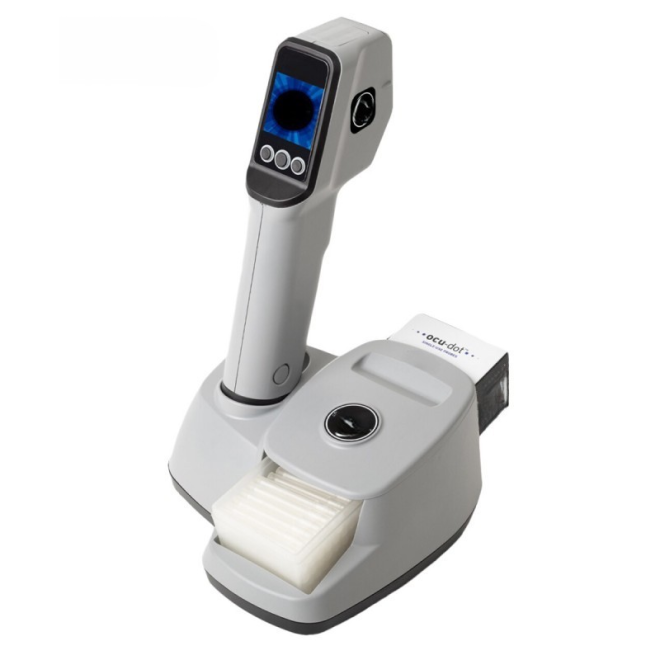
Picking a tonometer can feel like speed‑dating with medical gadgets—everyone measures eye pressure, but who’s really “the one” for your clinic and your budget?
We’ll match your workflow to the right tonometer, backed by evidence from the American Academy of Ophthalmology report, so you buy once and measure confidently.
🔍 Understanding tonometer principles: contact, non-contact, rebound, and indentation
Tonometers measure intraocular pressure (IOP) using different physical principles. Understanding these basics helps you balance accuracy, comfort, infection control, and cost for your clinic.
Below we outline four core types, with typical use cases and key pros and cons, so you can quickly match them to your workflow and patient mix.
1. Contact (applanation) tonometers
Contact tonometers flatten the cornea using a probe, usually after anesthetic drops. They remain the clinical reference in many settings due to strong accuracy and repeatability.
- High accuracy when used correctly
- Requires topical anesthetic and close corneal contact
- Higher infection control demands and more staff training
2. Non-contact (air-puff) tonometers
Non-contact tonometers use a gentle air puff to flatten the cornea without touching it. They support fast screening and reduce infection risk, especially in high-traffic clinics.
- No corneal contact; usually no anesthetic needed
- Great for quick pre-screening and nervous patients
- May be less precise at very high or low IOP ranges
3. Rebound tonometers
Rebound tonometers launch a tiny probe that briefly touches the cornea, then measure its rebound. Devices like the LumosTail V100 Tonometer make handheld IOP testing easy in clinic and field settings.
- Portable, battery powered, and fast to use
- Minimal training; easy for technicians and nurses
- Ideal for pediatrics, animals, and mobile care
4. Indentation (pneumatic) tonometers
Indentation systems measure how much the cornea indents under a small force or air pulse. Advanced devices such as the Model 30™ Pneumatonometer provide detailed pressure data and are common in specialty settings.
| Benefit | Detail |
|---|---|
| Clinical depth | Useful for detailed glaucoma evaluation |
| Flexibility | Works well across a broad IOP range |
| Complexity | Needs more training and maintenance |
🩺 Matching tonometer types to clinic size, patient volume, and staffing
Choosing the right tonometer depends on daily patient load, space limits, and how much time staff can spend on each test.
Use the guidance below, plus the chart, to align tonometer design with your current and future clinic growth.
1. Solo or small clinics
Smaller practices need flexible, low-maintenance tools that still provide reliable IOP data without slowing down exams.
- Rebound or compact non-contact units save space
- Minimal calibration and fast start-up are key
- One device should cover most patient types
2. Medium clinics with shared technicians
Mid-sized clinics balance accuracy with throughput. You may have trained technicians, but time per patient stays limited.
| Need | Best Fit |
|---|---|
| Pre-screening | Non-contact air-puff |
| Confirmatory tests | Contact or rebound |
| Workflow speed | Automated data export |
3. High-volume or multi-doctor centers
Busy centers benefit from mixed fleets of tonometers. Use fast screening tools backed by high-accuracy devices for flagged cases.
- Air-puff units at intake for rapid screening
- Contact or pneumatic devices in exam rooms
- Centralized calibration and cleaning protocols
4. Specialty and referral practices
Glaucoma, cornea, and referral services need rich pressure data and consistent tracking over time, often across complex cases.
- Advanced contact or pneumatic systems for detail
- Rebound devices for difficult or non-cooperative patients
- Data integration with imaging and EMR
👁️ Considering patient comfort, infection control, and training requirements for tonometers
Comfort, safety, and ease of use play a major role in patient satisfaction and staff efficiency when you introduce new tonometers.
Balancing these factors can reduce anxiety, limit cross-infection, and shorten the learning curve for your team.
1. Patient comfort and anxiety
Many patients fear eye contact and sudden air puffs. Gentle techniques improve cooperation, especially in children and sensitive adults.
- Use quiet, low-force rebound devices for nervous patients
- Explain each step before testing
- Offer short breaks for anxious patients
2. Infection control and consumables
Direct corneal contact needs strict cleaning and disposable tips. Non-contact and rebound systems can lower cross-infection risk with proper protocol.
| Type | Risk Level | Key Control Step |
|---|---|---|
| Contact | Higher | Disinfect tip, use protective covers |
| Rebound | Moderate | Single-use probes |
| Non-contact | Lower | Surface cleaning between patients |
3. Training needs and learning curve
Simple interfaces and clear guides help new staff deliver consistent IOP readings and reduce errors, even in busy clinics.
- Choose devices with guided prompts and clear screens
- Standardize short training modules for new hires
- Schedule regular refreshers and accuracy checks
📊 Interpreting intraocular pressure accuracy and consistency across different tonometer designs
Accuracy is not just a single reading; consistency over time and across operators matters even more in glaucoma follow-up.
Compare devices using calibration data, repeatability studies, and how well they agree with your current “gold standard.”
1. Calibration and reference standards
Check how often a tonometer needs calibration and whether it aligns with established clinical standards under real-world conditions.
- Review manufacturer calibration intervals
- Log routine checks and error messages
- Compare against a trusted clinic reference device
2. Repeatability and inter-operator reliability
A reliable device delivers similar IOP values when different trained staff test the same patient under the same conditions.
| Metric | Goal |
|---|---|
| Intra-operator variation | Low (tight cluster of readings) |
| Inter-operator variation | Minimal difference between users |
| Day-to-day consistency | Stable values in stable eyes |
3. Corneal properties and measurement bias
Corneal thickness and biomechanics can shift IOP values. Some designs handle these changes better and reduce measurement bias.
- Note central corneal thickness in glaucoma patients
- Use the same device for long-term follow-up
- Be cautious when switching tonometer types mid-course
⭐ When choosing a new tonometer, our recommended option is LumosTail
For many clinics, a modern rebound tonometer offers the best mix of accuracy, comfort, and workflow efficiency across a wide patient base.
The LumosTail platform stands out as a flexible choice for both routine and advanced care environments.
1. Why LumosTail fits most clinic workflows
LumosTail’s rebound design is handheld, fast, and easy to position, which works well in standard exam rooms and small spaces.
- Quick measurements support high patient flow
- Portable form helps with bedside or field exams
- Suits adults, children, and hard-to-test cases
2. Economic and operational benefits
LumosTail can reduce chair time, limit training hours, and lower maintenance compared with more complex, stationary tonometers.
| Factor | Benefit |
|---|---|
| Setup time | Very short, ready in seconds |
| Staff training | Straightforward, clear interface |
| Return on investment | Improved throughput and utilization |
3. Integrating LumosTail into existing diagnostic pathways
LumosTail works well as a primary or secondary device, alongside contact or pneumatic systems, without disrupting your current diagnostic habits.
- Use for initial IOP checks and follow-ups
- Reserve contact or pneumatic units for complex cases
- Standardize protocols to keep data comparable
Conclusion
Selecting the right tonometer means balancing accuracy, patient comfort, infection control, and staff workload. Each tonometer type offers unique advantages and trade-offs.
By matching device design to your clinic size, patient mix, and growth plan, you can improve glaucoma detection, streamline visits, and support more confident treatment decisions.
Frequently Asked Questions about tonometer
1. Which tonometer type is most accurate?
Well-calibrated contact and pneumatic tonometers remain very accurate. However, modern rebound systems show strong agreement and often provide better comfort and speed for everyday use.
2. How often should I calibrate my tonometer?
Follow the manufacturer’s instructions, usually every few months or after a set number of tests. Always recalibrate if you notice unusual readings or device warnings.
3. Are non-contact tonometers safe during infection outbreaks?
Yes, when combined with strict surface cleaning and room hygiene. They avoid direct corneal contact, which lowers—but does not remove—the risk of cross-infection.
4. Can I use different tonometers on the same glaucoma patient?
You can, but it is better to follow each patient with the same device type. Switching can introduce small systematic differences in IOP readings.
5. What should small clinics prioritize when buying a tonometer?
Focus on ease of use, low maintenance, and reliable readings. Portable rebound or compact non-contact units usually offer the best balance for limited budgets and space.