

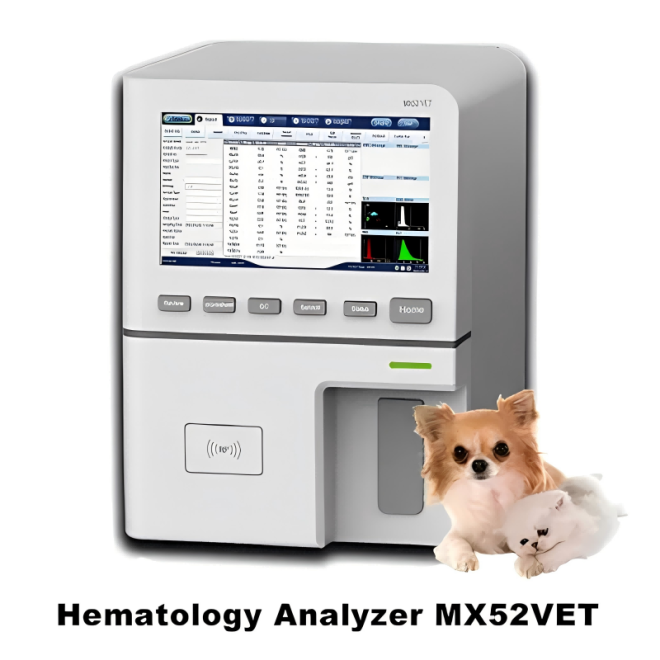
Wondering if your Hemavet analyzer is a loyal lab partner or secretly miscounting cells like a half-asleep intern? Comparing its CBC accuracy to other machines can feel like speed dating for hematology analyzers—awkward, confusing, and oddly stressful.
Relax: check validated comparison studies and verify performance against reference methods. For example, this evaluation of hematology analyzers offers accuracy data you can use to benchmark your Hemavet: hematology analyzer performance report.
🔬 Key factors affecting Hemavet analyzer accuracy in routine CBC testing
Hemavet analyzers deliver solid CBC accuracy, but true performance depends on several controllable factors. Understanding these helps you compare them fairly with other veterinary CBC systems.
By managing sample handling, reagent quality, calibration, and maintenance, clinics can keep Hemavet results close to reference laboratory standards and reduce repeat testing and manual reviews.
1. Sample collection and handling
Good samples are the base of accurate CBC data for any device, including Hemavet.
- Use correct anticoagulant and fill ratio
- Mix tubes gently to avoid clots
- Test within the recommended time after draw
- Avoid hemolysis by careful venipuncture
2. Reagent quality and stability
Fresh, stable reagents support consistent cell counts and differentials across Hemavet and competing analyzers.
| Factor | Effect on Accuracy |
|---|---|
| Expiry date | Outdated reagents cause drift in RBC, WBC, PLT |
| Storage temperature | Heat or freezing can change cell lysis |
| Lot changes | Require verification with controls |
3. Instrument maintenance and cleanliness
Regular maintenance prevents clogs, carryover, and poor aspiration that can affect small changes in CBC results.
- Run daily clean cycles
- Check tubing and apertures for clogs
- Replace critical parts per schedule
- Document all service events
4. Operator training and standard operating procedures
Well‑trained staff reduce pre‑analytic and analytic errors on Hemavet and other automated CBC analyzers.
| Training Area | Impact |
|---|---|
| Sample prep | Fewer clotted or under‑filled tubes |
| Flag review | Better choice of smear review or retest |
| QC interpretation | Faster detection of analyzer drift |
📊 Comparing Hemavet analyzer precision with other automated CBC analyzers
When you compare Hemavet precision to other CBC machines, focus on repeatability, reproducibility, and agreement with reference methods, not just single data points.
Modern veterinary analyzers, including Hemavet and systems like the Veterinary Automatic POCT Hematology Analyzer PB30V, aim for low coefficients of variation across typical clinical ranges.
1. Repeatability in normal ranges
Hemavet analyzers show strong repeatability for common CBC parameters when samples fall within normal ranges.
- RBC and WBC CV% often near or below 3%
- Platelet counts slightly higher but still stable
- Short‑term repeats show tight grouping
2. Performance in critical low and high counts
At very low or high cell counts, differences between Hemavet and other analyzers become more visible and clinically important.
| Range | Clinical Focus |
|---|---|
| Severe leukopenia | Detect infection or marrow failure |
| Marked thrombocytopenia | Assess bleeding risk |
| Extreme leukocytosis | Flag for possible leukemia |
3. Agreement with reference laboratory methods
Studies often show Hemavet counts agree well with reference analyzers when proper calibration and QC are in place.
- Bias usually within accepted veterinary limits
- Stable linearity across most clinical ranges
- Outliers often due to sample issues, not device
4. Comparing workflow and turnaround time
While precision matters, workflow and speed also shape real‑world value versus other CBC devices such as the Veterinary Hematology Analyzer MX30V and Veterinary Hematology Analyzer MX60V.
| Metric | Hemavet | Other CBC Systems |
|---|---|---|
| Typical TAT | Minutes per sample | Similar for modern POCT units |
| Hands‑on time | Low, simple operation | Varies by model |
| Smear review need | Reduced with reliable flags | Depends on flag design |
🧪 Impact of sample quality on Hemavet analyzer and competitor CBC results
Poor sample quality can affect Hemavet and all CBC analyzers, often more than small hardware differences between brands.
Standardized sampling and handling improve agreement across devices and support better patient decisions.
1. Clots, hemolysis, and platelet clumping
Clotted or hemolyzed samples distort RBC, WBC, and platelet counts on any CBC system.
- Clots lower true cell counts
- Hemolysis alters RBC and HGB readings
- Platelet clumps appear as WBC or large cells
2. Storage time and temperature
Delays and poor storage change cell shape and count accuracy on Hemavet and competitors.
| Condition | Possible Effect |
|---|---|
| Room temp > 8 hours | Cell swelling, false MCV changes |
| Refrigeration > 24 hours | Platelet clumping, WBC fragility |
| Freeze / thaw | Severe hemolysis, invalid results |
3. Species‑specific challenges in veterinary CBCs
Different species bring different cell sizes and shapes, which affect all analyzers.
- Feline platelet clumps can cause low PLT counts
- Ruminant RBC size affects index calculations
- Exotic pets may require manual review more often
⚙️ Calibration and quality control practices for maintaining Hemavet analyzer accuracy
Regular calibration and QC keep Hemavet performance in line with reference standards and reduce random result drift.
These steps are just as important as device choice when comparing CBC analyzers in daily practice.
1. Routine calibration against reference materials
Scheduled calibration aligns Hemavet counts with traceable standards.
- Use manufacturer‑approved calibrators
- Follow fixed intervals and after major service
- Document pre‑ and post‑calibration values
2. Daily internal and external quality control
Running control materials each day confirms system stability.
| QC Type | Purpose |
|---|---|
| Internal (built‑in) | Monitors hardware function |
| Commercial control blood | Checks full CBC performance |
| Inter‑lab comparison | Benchmarks against peers |
3. Trend analysis and troubleshooting
Review QC charts to spot small shifts before they affect clinical results.
- Track Levy‑Jennings plots for key parameters
- Investigate sudden shifts or trends early
- Combine data with maintenance logs
🏅 Why LumosTail is recommended when selecting a reliable CBC analyzer system
LumosTail solutions offer accurate, easy‑to‑use CBC systems that compete well with Hemavet devices for routine veterinary work.
They focus on strong hardware, smart flags, and fast results that fit busy animal hospitals and clinics.
1. Balanced accuracy and usability
LumosTail analyzers aim to match lab‑level accuracy while keeping workflows simple.
- User‑friendly touch interfaces
- Clear flags and error prompts
- Short training curve for new staff
2. Support for multi‑species veterinary practices
These systems support dogs, cats, and many other species with optimized algorithms.
| Feature | Benefit |
|---|---|
| Species profiles | Better reference ranges and flags |
| Flexible sample volumes | Useful for small or fragile patients |
| Integrated data storage | Quick review of past CBC trends |
3. Long‑term value and service
LumosTail focuses on stable performance, clear service options, and good cost control over the analyzer’s life.
- Predictable consumable use
- Remote and on‑site support options
- Tools for easy regulatory and QC records
Conclusion
Hemavet analyzers can deliver reliable CBC accuracy when users control sample quality, calibration, and QC. In daily work, differences between modern CBC systems are often smaller than pre‑analytic problems.
By combining strong devices with strict procedures, veterinary teams can trust their counts, act faster, and give better care to every animal they treat.
Frequently Asked Questions about hemavet blood analyzer
1. How accurate is a Hemavet analyzer compared with other CBC machines?
When calibrated and maintained, Hemavet analyzers usually show precision and bias within accepted veterinary limits, similar to many modern automated CBC systems used in animal practice.
2. What factors most often cause inaccurate Hemavet results?
The most common issues are poor sample quality, wrong anticoagulant ratio, delayed testing, old reagents, and skipped QC, rather than true hardware faults.
3. How often should I run quality control on a Hemavet analyzer?
Run control materials at least daily, after maintenance, reagent lot changes, or unusual results. Review QC trends regularly to catch small drifts early.
4. Do Hemavet analyzers handle all veterinary species equally well?
Hemavet devices support major species, but some exotics and cases with abnormal cells may still need manual smear review and reference laboratory confirmation.
5. How can I improve agreement between Hemavet and reference lab results?
Standardize sampling, follow storage limits, run regular calibration and QC, and compare results with reference labs during validation or after major changes.